Mostrando entradas con la etiqueta asteroid. Mostrar todas las entradas

martes, 4 de septiembre de 2018

NASA Leverages HPC for Asteroid Defense


“We are not going to send Bruce Willis to the asteroid to blow it up,” laughs Donovan Mathias. Donovan leads NASA Ames’ Engineering Risk Assessment team, and he’s talking about the work he does to protect the earth from asteroid impacts – work that is decidedly more Deep Blue than Deep Impact.

NASA has been actively working to understand and mitigate the risks posed by asteroids for a decade. Much of this work currently takes place in California as part of the Asteroid Threat Assessment Project (ATAP) at NASA Ames. The scientists at ATAP – a young project, only in its fourth year – use supercomputers to conduct risk and damage assessment of simulated atmospheric entries by asteroids.

Supercomputing at ATAP

ATAP makes extensive use of the Probabilistic Asteroid Impact Risk (PAIR) model, which simulates the physics of asteroids entering – and sometimes, exploding in – the atmosphere, allowing ATAP to estimate damage from blast waves, heat, tsunamis, and more. PAIR runs millions of impact cases, allowing it to capture a wide range of asteroid properties and damage scenarios, as well as the likelihoods of each. This sets ATAP’s work apart from previous asteroid risk assessments, which predominantly worked with average values.

Beyond PAIR, ATAP also leverages the Cart3D computational fluid dynamics software – the same software used to model spacecrafts’ heat shields – to analyze the propagation of force from asteroids that burst in the air. They also work with ALE3D hydrocode simulations to study tsunami generation and cratering effects.

The data produced by ATAP’s simulations help NASA and other government agencies understand the potential impacts of a broad variety of different asteroid entry scenarios. The understanding provided by ATAP’s research has helped NASA’s Science Definition Team (SDT) narrow down which asteroid sizes pose significant threats to the planet, allowing them to further focus their asteroid tracking activities.

Eric Stern, a research scientist at NASA, likens the “incredibly unbelievable speeds” being simulated to spacecraft, but at an “extreme scale” – a scale that pushes the tools at hand to their limits. ATAP runs its simulations on the Pleiades supercomputer, an SGI system benchmarked at 5.95 Linpack petaflops that ranks 24th on the latest Top500 list.

The future of supercomputing in asteroid defense

ATAP’s efforts are just the beginning. This summer, the White House’s Office of Science and Technology Policy issued the “National Near-Earth Object Preparedness Strategy and Action Plan,” a ten-year plan aimed at ramping up and coordinating asteroid preparedness and defense activities across government agencies. The plan emphasizes the role of supercomputing and plans for an “integrated suite of computational tools for modeling NEO impact risks and mitigation techniques[.]” Specifically, it outlines how agencies will:

Ascertain what information each participating organization requires on what timeframe, identify gaps, and develop recommendations for modeling improvements. […]

Develop and validate a suite of computer simulation tools for assessing the outcome of deflection or disruption techniques applied to a NEO. […]

Establish a suite of computer simulation tools for assessing the local, regional, and global risks associated with an impact scenario. […]

Assess the sensitivities of these models to uncertainties in NEO dynamical and physical properties.


ATAP is also generally advancing its risk modeling capabilities and moving toward assessing different asteroid structures, ranging from “monoliths” to “loosely bound rubble piles.”

jueves, 3 de mayo de 2018

Un meteorito hallado en África sugiere que en la luna hay agua oculta


Científicos japoneses hallaron en el meteoro lunar un mineral que requiere la presencia de agua para formarse.

Un equipo de investigadores japoneses halló en un meteoro lunar, descubierto en el continente africano, muestras de moganita. Debido a que ese mineral solo puede formarse en presencia de agua, el hallazgo sugiere –según los científicos que lo examinan– que debajo de la superficie de la luna hay depósitos ocultos de agua helada, recoge el portal Space.com.

Masahiro Kayama, autor principal del estudio publicado en Science Advances, cree que la moganita se formó en la superficie de la luna –en el área Procellarum Terrane– cuando aguas originalmente presentes en el polvo lunar se evaporaron por causa de la intensa luz solar. De acuerdo con el investigador, a lo profundo de la superficie lunar podría haber cristales de agua helada, en grandes cantidades.

Se podrían extraer alrededor de seis litros por metro cúbico de roca lunar

"Por primera vez podemos demostrar que hay agua helada en el material lunar", comentó Kayama. "En una moganita hay poca agua, porque se forma por su evaporación. Ese es el caso de la superficie de la luna, pero en el subsuelo, mucha agua permanece en forma de hielo, porque está protegida de la luz solar", agregó.

Estudios anteriores ya habían determinado la presencia de agua en la luna, pero el científico japonés afirma que hasta ahora no se habían encontrado evidencias de su presencia en el subsuelo, en las latitudes medias y bajas. "Es el primer conocimiento de la presencia de agua en la zona del subsuelo" de este satélite, señaló.

El estudio considera que debajo de la superficie de la luna habría hasta 0,6 % de agua, lo que significa que se podrían extraer alrededor de seis litros por metro cúbico de roca lunar. Según Kayama, esto indica que ese recurso es allí "muy abundante" y sería suficiente para futuros astronautas o, incluso, para "la gente que quizás podría vivir en la luna".

miércoles, 17 de enero de 2018

Un asteroide "potencialmente peligroso" vuela hacia Tierra a 108.000 km/h


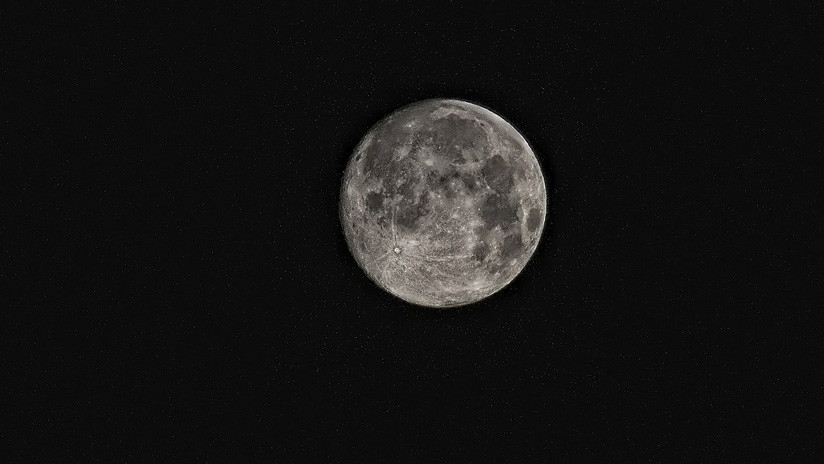
pixabay / rolandoemail

Científicos opinan que su impacto contra nuestro planeta tendría consecuencias "muy severas" y durarían varios años.

El asteroide AJ129 2002, que pasará cerca del nuestro planeta el próximo 4 de febrero a una velocidad de 107.826 km/h, ha sido clasificado por la Unión Astronómica Internacional como "potencialmente peligroso".

El asteroide mide aproximadamente 1,1 kilómetros, lo que le hace más grande que el edificio más alto del mundo, el Burj Khalifa de Dubái, que tiene 800 metros de altura.

VIDEO: Dubái despide el 2017 con un récord Guinness por el espectáculo láser más grande del mundo

Según cálculos de la NASA, el asteroide debería pasar a una distancia de 4,2 millones de kilómetros de la Tierra, lo que se entiende como una distancia bastante cercana en la escala espacial.

Con ello, se definen como "peligrosos" los asteroides que se encuentran en un radio menor de 7,4 millones kilómetros de nuestro planeta.

Consecuencias severas en caso de impacto 

Los científicos del Centro Nacional de Investigación Atmosférica (EE.UU.) advierten que si el asteroide impacta contra la Tierra, las consecuencias tendrían un carácter "global muy severo" y durarían varios años. Nuestro planeta se convertiría en un lugar mucho más oscuro, frío y seco.

En el "peor de los casos", el hollín permanecerá en la atmósfera durante unos 10 años, mientras que el polvotardaría seis años en asentarse. Las temperaturaspromedio en todo el mundo bajarían hasta los 8°C.

No obstante, la NASA no estima que este asteroide colisione con la Tierra.


jueves, 22 de junio de 2017

este sábado 24 de junio el asteroide 441987 2010NY65 se acercará a la Tierra

Este sábado la órbita de un enorme cuerpo celeste se encontrará en su punto más cercano a la Tierra. Los científicos evalúan los riesgos de este acontecimiento.

Imagen ilustrativa

NASA/JPL

Recientemente los investigadores de la Agencia Espacial Europea informaron que este sábado 24 de junio el asteroide 441987 2010NY65 se acercará a la Tierra. La noticia de que este cuerpo celeste de 228 metros de diámetro se aproxima a nuestro planeta ha provocado mucho desconcierto entre los medios rusos, así como en algunos europeos, que empezaron a evaluar las posibles consecuencias catastróficas de una colisión con el asteroide.

Para desentrañar los riesgos de esta 'cita astronómica', el equipo de la agencia rusa NSN conversó con Dmitri Vibe, el jefe del Departamento de Física y Evolución de las Estrellas del Instituto de Astronomía de la Academia de Ciencias de Rusia.

"Para los astrónomos se trata de un acontecimiento ordinario. A veces pasan [cerca de la Tierra] cuerpos más grandes y a una distancia menor. En este caso se trata de una simple rutina astronómica", comentó el experto.

"Créanme, si existiera la amenaza de una colisión con un asteroide de 300 metros dentro de dos días los científicos no estarían hablando de ello con tanta calma, sino que estarían excavando con palas un refugio en algún lugar", subrayó Dmitri Vibe.

Este sábado, el asteroide 441987 2010NY65 pasará cerca de la Tierra a una distancia casi ocho veces mayor que la que nos separa de la Luna. El video de la NASA muestra cómo es la órbita del cuerpo celeste en comparación con la del nuestro planeta.


domingo, 11 de junio de 2017

Cazando asteroides: la NASA encuentra 10 objetos "potencialmente peligrosos" que orbitan la Tierra

MT

La misión de la NASA que se dedica al estudio de los objetos cercanos a la Tierra ha publicado el balance del tercer año de la investigación.

El 5 de junio la NASA publicó los resultados del tercer año de su misión espacial Near-Earth Object Wide-field Infrared Survey Explorer (NEOWISE), cuyo fin es el descubrimiento y el monitoreo de los objetos cercanos a la Tierra. Los objetos próximos a la Tierra (NEO, por sus siglas en inglés) son cometas y asteroides que fueron 'atraídos' por la gravitación de los planetas de nuestro sistema solar y luego entraron en la órbita de la Tierra.

De acuerdo con el informe de la NASA, el año pasado los científicos de la misión descubrieron 97 objetos celestes próximos, entre ellos 5 cometas64 asteroides del cinturón principal y 28 objetos cercanos a la Tierra.

Diez de los cuerpos celestes descubiertos por la NEOWISE fueron clasificados como "asteroides potencialmente peligrosos" para nuestro planeta. Los científicos los calificaron así debido a su tamaño y sus órbitas.

El equipo de NEOWISE también ha publicado una animación en la que ha demostrado los objetos encontrados en el tercer año de existencia del proyecto después de que el programa fuera relanzado en 2013. Para crear el video, los investigadores analizaron más de 2,6 millones de imágenes infrarrojasrecogidas a lo largo del año pasado por el telescopio NEOWISE. 

martes, 6 de junio de 2017

Un meteorito "más brillante que la Luna" cae cerca del Reino Unido 


Publicado: 7 Jun 2017 | 00:40 GMTYoutube 


Su especial luminosidad permitió que fuera visto en otras ciudades del país como Nottingham, Guernsey, en incluso al noroeste de Francia.

Una cámara de seguridad en una playa del condado de Devon, en el Reino Unido, captó el momento en que una brillante bola de fuego (meteoro luminoso) cayó en el mar luego de atravesar a gran velocidad la atmósfera terrestre.

Según ha informado 'The Telegraph', el fenómeno ocurrió el pasado 1 de junio y pudo ser observado por decenas de testigos. Al respecto, Robert Massey, director ejecutivo de la Real Sociedad Astronómica, aseguró que se trató de unbólido –meteoro muy brillante que produce una huella luminosa- y que resultó ser "más brillante que la Luna".

"Esto demuestra que gran cantidad de la astronomía se puede disfrutar sin ningún equipo especial en absoluto", agregó el astrónomo.

Su especial brillantez permitió que fuera visto en otras ciudades del país como Nottingham, Guernsey, en incluso al noroeste de Francia.

Este tipo de cuerpos celestes por lo general se queman por efecto de la fricción en las capas superiores de la atmosfera. Los meteoros de gran tamaño son los que producen mayor brillantez y el surco luminoso puede llegar a ser de varios minutos. Generalmente explotan antes de llegar al suelo produciendo un estruendo, pero en algunas ocasiones es posible encontrar fragmentos que no se volatilizaron.

jueves, 20 de abril de 2017

NASA captures images of large asteroid set to fly by Earth


Photos: All about asteroids

Asteroid 2014 JO25 will fly by Earth on April 19, 2017, at a distance of about 1.1 million miles (1.8 million kilometers) or about 4.6 times the distance from Earth to the moon.

Hide Caption

1 of 20

Photos: All about asteroids

This graphic shows asteroid 2016 HO3 orbiting Earth as the pair go around the sun together. The asteroid was first spotted on April 27, 2016, by the Pan-STARRS 1 asteroid survey telescope on Haleakala, Hawaii.

Hide Caption

2 of 20

Photos: All about asteroids

All about asteroids – This graphic shows the track for asteroid 2004 BL86, which flew about 745,000 miles from Earth on January 26, 2015. That's about three times as far away as the moon.

Hide Caption

3 of 20

Photos: All about asteroids

This graphic shows the path Asteroid 2014 RC took as it passed Earth on September 7, 2015. The space rock came within one-tenth the distance from Earth to the moon.

Hide Caption

4 of 20

Photos: All about asteroids

NASA scientists used Earth-based radar to produce these sharp views of the asteroid designated "2014 HQ124" on June 8, 2014. NASA called the images "most detailed radar images of a near-Earth asteroid ever obtained."

Hide Caption

5 of 20

Photos: All about asteroids

The Hubble Space Telescope snapped a series of images on September 10, 2013, revealing a never-before-seen sight: An asteroid that appeared to have six comet-like tails.

Hide Caption

6 of 20

Photos: All about asteroids

A diagram shows the orbit of an asteroid named 2013 TV135 (in blue), which made headlines in September 2013 when it passed close by Earth. The probability of it striking Earth one day stands at 1 in 63,000, and even those odds are fading fast as scientists find out more about the asteroid. It will most likely swing past our planet again in 2032, according to NASA.

Hide Caption

7 of 20

Photos: All about asteroids

Asteroid 2012 DA14 made a record-close pass -- 17,100 miles -- by Earth on February 15, 2013. Most asteroids are made of rocks, but some are metal. They orbit mostly between Jupiter and Mars in the main asteroid belt. Scientists estimate there are tens of thousands of asteroids and when they get close to our planet, they are called near-Earth objects.

Hide Caption

8 of 20

Photos: All about asteroids

Another asteroid, Apophis, got a lot of attention from space scientists and the media when initial calculations indicated a small chance it could hit Earth in 2029 or 2036. NASA scientists have since ruled out an impact, but on April 13, 2029, Apophis, which is about the size of 3½ football fields, will make a close visit -- flying about 19,400 miles (31,300 kilometers) above Earth's surface. The images above were taken by the European Space Agency's Herschel Space Observatory in January 2013.

Hide Caption

9 of 20

Photos: All about asteroids

If you really want to know about asteroids, you need to see one up close. NASA did just that. A spacecraft called NEAR-Shoemaker, named in honor of planetary scientist Gene Shoemaker, was the first probe to touch down on an asteroid, landing on the asteroid Eros on February 12, 2001. This image was taken on February 14, 2000, just after the probe began orbiting Eros.

Hide Caption

10 of 20

Photos: All about asteroids

The first asteroid to be identified, 1 Ceres, was discovered January 1, 1801, by Giuseppe Piazzi in Palermo, Sicily. But is Ceres just another asteroid? Observations by NASA's Hubble Space Telescope show that Ceres has a lot in common with planets like Earth. It's almost round and it may have a lot of pure water ice beneath its surface. Ceres is about 606 by 565 miles (975 by 909 kilometers) in size and scientists say it may be more accurate to call it a mini-planet. NASA's Dawn spacecraft is on its way to Ceres to investigate. The spacecraft is 35 million miles (57 million kilometers) from Ceres and 179 million miles (288 million kilometers) from Earth. The photo on the left was taken by Keck Observatory, Mauna Kea, Hawaii. The image on the right was taken by the Hubble Space Telescope.

Hide Caption

11 of 20

Photos: All about asteroids

One big space rock got upgraded recently. This image of Vesta was taken by the Dawn spacecraft, which is on its way to Ceres. In 2012, scientists said data from the spacecraft show Vesta is more like a planet than an asteroid and so Vesta is now considered a protoplanet.

Hide Caption

12 of 20

Photos: All about asteroids

The three-mile long (4.8-kilometer) asteroid Toutatis flew about 4.3 million miles (6.9 million kilometers) from Earth on December 12, 2012. NASA scientists used radar images to make a short movie.

Hide Caption

13 of 20

Photos: All about asteroids

Asteroids have hit Earth many times. It's hard to get an exact count because erosion has wiped away much of the evidence. The mile-wide Meteor Crater in Arizona, seen above, was created by a small asteroid that hit about 50,000 years ago, NASA says. Other famous impact craters on Earth include Manicouagan in Quebec, Canada; Sudbury in Ontario, Canada; Ries Crater in Germany, and Chicxulub on the Yucatan coast in Mexico.

Hide Caption

14 of 20

Photos: All about asteroids

NASA scientists say the impact of an asteroid or comet several hundred million years ago created the Aorounga crater in the Sahara Desert of northern Chad. The crater has a diameter of about 10.5 miles (17 kilometers). This image was taken by the Space Shuttle Endeavour in 1994.

Hide Caption

15 of 20

Photos: All about asteroids

In 1908 in Tunguska, Siberia, scientists theorize an asteroid flattened about 750 square miles (1,200 square kilometers) of forest in and around the Podkamennaya Tunguska River in what is now Krasnoyarsk Krai, Russia.

Hide Caption

16 of 20

Photos: All about asteroids

What else is up there? Is anyone watching? NASA'sNear-Earth Object Program is trying to track down all asteroids and comets that could threaten Earth. NASA says 9,672 near-Earth objects have been discovered as of February 5, 2013. Of these, 1,374 have been classified as Potentially Hazardous Asteroids, or objects that could one day threaten Earth.

Hide Caption

17 of 20

Photos: All about asteroids

One of the top asteroid-tracking scientists is Don Yeomans at the Jet Propulsion Laboratory, which is managed by the California Institute of Technology. Yeomans says every day, "Earth is pummeled by more than 100 tons of material that spewed off asteroids and comets." Fortunately, most of the asteroid trash is tiny and it burns up when it hits the atmosphere, creating meteors, or shooting stars. Yeomans says it's very rare for big chunks of space litter to hit Earth's surface. Those chunks are called meteorites.

Hide Caption

18 of 20

Photos: All about asteroids

Asteroids and comets are popular fodder for Earth-ending science fiction movies. Two of the biggest blockbusters came out in 1998: "Deep Impact" and "Armageddon." (Walt Disney Studios) Others include "Meteorites!" (1998), "Doomsday Rock" (1997), "Asteroid" (1997), "Meteor" (1979), and "A Fire in the Sky" (1978). Can you name others?

Hide Caption

19 of 20

Photos: All about asteroids

Asteroid 1998 QE2 is about 3.75 million miles from Earth. The white dot is the moon, or satellite, orbiting the asteroid.

Hide Caption

20 of 20

Story highlights

The asteroid is about the length of six NFL football fieldsNASA: No, it won't hit us

(CNN)A large asteroid is whizzing by Earth this week, and NASA has the images to prove it.

The space rock, known by the very dull name of 2014 JO25, was expected to safely fly by Earth on Wednesday night, according to NASA.

Radar images obtained by NASA a day earlier show a peanut-shaped asteroid that rotates about once every five hours.

"Although there is no possibility for the asteroid to collide with our planet, this will be a very close approach for an asteroid of this size," the space agency said in a statement.

What size are we talking about?

Measurements indicate the asteroid is about 2,000 feet (650 meters) in size. That's 670 yards (613 meters), or about the length of six NFL football fields.

Asteroid 2014 JO25 will safely pass Earth tomorrow. We viewed it w/ radar data today, from 1.9 million miles away.https://t.co/FPICdrj26M pic.twitter.com/5CyL35W7gz

— Asteroid Watch (@AsteroidWatch) April 19, 2017


And how close is "very close"?

This rock will come about 1.1 million miles (1.8 million kilometers) from Earth, NASA says. That's about 4.6 times the distance from Earth to the moon. The moon, by the way, is about 239,000 miles (384,400 kilometers) from Earth.

While several small asteroids pass within this distance of Earth a few times a week, this is the closest by any known asteroid of this size or bigger in 13 years -- since asteroid Toutatis in 2004.

Can you see 2014 JO25? Well, maybe. This asteroid has a reflective surface and you might be able to see it with a telescope.

"The asteroid will approach Earth from the direction of the sun and will become visible in the night sky after April 19," NASA said.

If you don't have your own telescope, you canwatch the asteroid online.

Astronomers discovered 2014 J025 in ... you guessed it ... 2014. This will be its closest encounter with Earth for the last 400 years. NASA said telescopes around the world will be trained on it during the flyby to try to learn more about it.

Additional radar observations Thursday and Friday will hopefully provide better images, NASA said.

There was no word early Thursday on whether the space rock had whizzed past Earth.

miércoles, 21 de diciembre de 2016

un asteroide gigante puede impactar de manera inevitable contra la Tierra

Se encendieron las alarmas debido a la posibilidad de que un asteroide gigante puede impactar de manera inevitable contra la Tierra. Así lo advirtió el director general del Centro de Defensa Planetaria de RusiaAnatoli Záitsev, reportaron los medios internacionales.

Anatoli Záitsev dio esta advertencia durante una conferencia sobre el espacio, que se ha celebrado este 20 de diciembre en Moscú, Rusia.

Anatoli Záitsev recordó que el año pasado la Tierra tuvo mucha suerte. ¿Por qué? Nuestro planeta estuvo cerca de chocar contra el asteroide 2015 TB145, que tenía alrededor de 600 metros de anchura. El acercamiento ocurrió el 31 de octubre del 2015.

Anatoli Záitsev insistió en que tenemos que elaborar medidas de protección, pues desde hace 20 años 556 ‘rocas’ han ingresado en la atmósfera de la Tierra. No ocurrió una catástrofe por su tamaño relativamente pequeño.

Cabe señalar que Anatoli Záitsev ha propuesto la construcción del proyecto Ciudadela: un sistema internacional de defensa planetaria con elementos de reacción a corto y largo plazo, así como con servicios de pronósticos y defensa regional.

miércoles, 2 de noviembre de 2016

Scientists have previously suggested Mars may have a large number of meteorites because of its closeness to the Asteroid Belt.

The Mars Curiosity rover has found a small, smooth meteor on the surface of Mars that scientists have nicknamed the "egg rock" for its unusual shape.

It is not the first meteorite found on Mars, but it may be the most interesting. Calculated to be no more than 1.6 inches in diameter, the meteorite has a smooth surface that suggests it may have been melted, possibly as it entered Mars’ atmosphere, Universe Today reported.

Pictures of the meteorite taken Oct. 30 showed an egg-shaped meteor with a somewhat pitted surface indicative of melting and reforming. According to Earth Sky, chemical tests taken by the Curiosity rover showed the meteorite was made from metal, possibly from a nickel-iron mixture that is unlike other rocks and rock formations found on Mars.

Nickel-iron mixtures have been found in the cores of planets, and scientists from Arizona State University think it is likely the small meteorite may have come from the core of a dwarf planet that was formed by the compression of a large volume of cosmic dust, the Daily Mail reported.

Scientists have previously suggested Mars may have a large number of meteorites because of its closeness to the Asteroid Belt. It is thought that Mars may often be struck by objects that get kicked out of Jupiter’s gravity field.

Mars’ atmosphere is many times thinner than Earth’s, so objects that strike its surface may last a lot longer, with far less erosion than objects striking Earth’s surface.

It is conceivable that meteors could last millions of years on Mars because of the thin atmosphere, despite Mars’ often extreme weather patterns.

ALBUQUERQUE, Nov. 3 (UPI) - The Mars rover Curiosity has confirmed the identity of a small metallic globule, spotted last week by scientists in images captured by the rover's Mastcam. New chemical analysis suggests it is an iron-nickel meteorite.

"The dark, smooth and lustrous aspect of this target, and its sort of spherical shape attracted the attention of some MSL scientists when we received the Mastcam images at the new location," Pierre-Yves Meslin, an astrophysicist at the National Center for Scientific Research in France, explained in a press release.

Intrigued by the globule's appearance, scientists working on the Curiosity mission instructed the rover to analyze the object with its laser powered ChemCam. The instrument fired a series of laser pulses at the meteorite from various angles.

Initial readings suggest the presence of iron, nickel and phosphorus, a common trifecta in iron-nickel meteorites - evidence of its likely origin inside the molten core of a melting asteroid.

"Iron meteorites provide records of many different asteroids that broke up, with fragments of their cores ending up on Earth and on Mars," explained Horton Newsom, a scientist on the ChemCam team and a researcher at the University of New Mexico. "Mars may have sampled a different population of asteroids than Earth has."

Newsom, Meslin and other ChemCam team members are currently analyzing the results of the laser pulses bounced off Egg Rock. Researchers hope to compare the meteorite's surface composition to its insides in order to gauge how long it has been resting on the Martian surface, exposed to the elements. Scientists also want to compare Egg Rock to meteorite samples found elsewhere on Mars - and to meteorite samples from Earth.

In the meantime, Curiosity will continue its way up Mount Sharp in search of evidence of ancient environmental shifts on Mars.

Licencia de Creative Commons
El Misterio del Meteorito de Carancas by HERWARTH RONALD MORALES CHUMACERO is licensed under a Creative Commons Reconocimiento-SinObraDerivada 4.0 Internacional License.
Creado a partir de la obra en El Misterio del Meteorito de Carancas.